
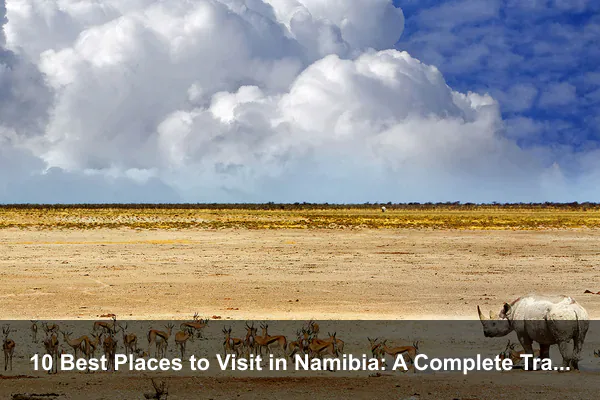
Namibia is built for epic road trips: giant dunes, wildlife-rich pans, Atlantic shipwreck coastlines, and one of Africa’s most dramatic canyons. This guide plan maps 10 standout destinations across the country so travelers can balance safari time, desert landscapes, coastal adventure, and culture in one itinerary.
Use it to shape a realistic route, whether you are self-driving or joining guided segments. Each section highlights who the place suits best, when to go, and how to access it, so you can estimate driving days, book key camps or lodges early, and avoid common logistics mistakes in remote areas.
Sossusvlei and Deadvlei
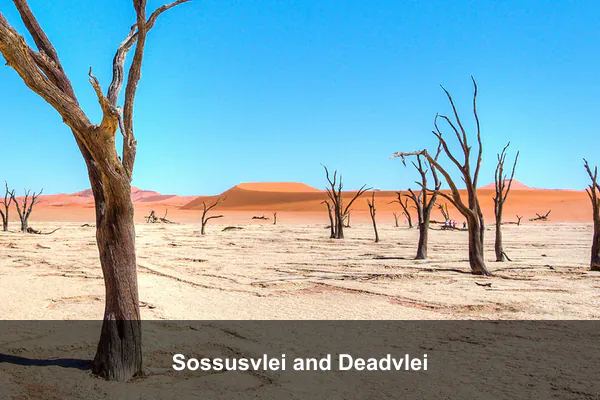
Sossusvlei and nearby Deadvlei in the Sesriem area of Namib-Naukluft National Park are Namibia’s signature red-dune landscapes, best for dune climbs, desert photography, and surreal scenery. Start at sunrise to climb Big Daddy or Dune 45 in cool, golden light, then continue to Deadvlei before the crowds and heat build. The white clay pan, dead camel-thorn trees, and towering orange dunes create one of Africa’s most striking photo scenes. Shade is minimal, and temperatures rise fast after 10 a.m., so carry plenty of water and finish your walk early. Visit between April and October for cooler mornings. Access is straightforward: self-drive to Sesriem, then use a 4×4 or the park shuttle for the final sandy stretch.
| Best for | Dune climbs, desert photography, surreal landscapes |
|---|---|
| Location | Namib-Naukluft National Park (Sesriem area) |
| Best time | April to October for cooler mornings |
| Access | Self-drive to Sesriem; 4×4 or shuttle for final sandy stretch |
Additional Info: Be at Deadvlei early; shade is minimal and temperatures rise fast after 10 a.m.
Etosha National Park
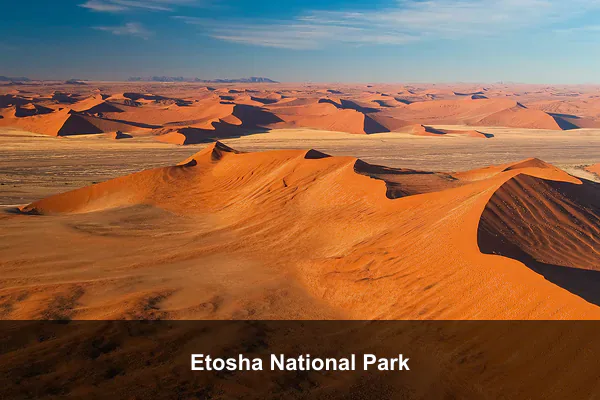
Etosha National Park is Namibia’s top destination for self-drive safari and waterhole wildlife viewing, with excellent game circuits across the Okaukuejo, Halali, and Namutoni sectors in northern Namibia. Visit in the May to October dry season, when animals cluster at waterholes and sightings are most reliable. A classic plan is to drive between key pans at sunrise and late afternoon, then stay overnight inside the park to maximize time in the field. Okaukuejo, Halali, and Namutoni camps are practical bases for multi-day routes, each giving easy access to nearby viewing spots. Do not miss at least one evening at Okaukuejo’s floodlit waterhole for after-dark sightings. Enter via Andersson, Von Lindequist, or Galton gates depending on your route.
| Best for | Self-drive safari and waterhole wildlife viewing |
|---|---|
| Location | Northern Namibia (Okaukuejo, Halali, Namutoni sectors) |
| Best time | May to October dry season |
| Access | Enter via Andersson, Von Lindequist, or Galton gates |
Additional Info: Spend at least one evening at Okaukuejo's floodlit waterhole for night sightings.
Swakopmund and Walvis Bay Coast
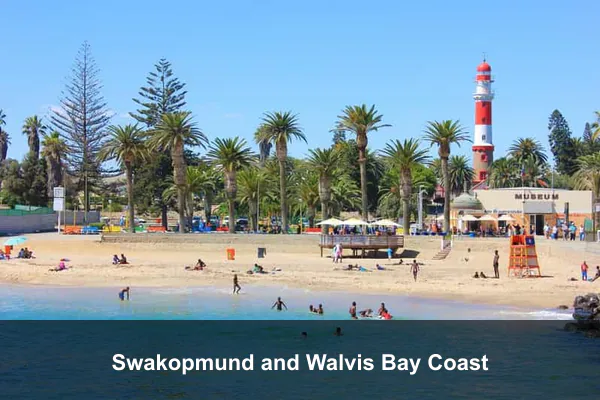
Swakopmund and Walvis Bay on Namibia’s central Atlantic coast in the Erongo Region are ideal for travelers who want desert thrills and ocean wildlife in one stop: spend mornings sandboarding the dunes, then join a dolphin cruise through Walvis Bay lagoon before unwinding in Swakopmund’s relaxed seaside cafés and promenades. This coast is best from October to April, when sea conditions and weather are generally milder for boat trips and outdoor activities. Getting here is straightforward via the B2 road from Windhoek, and many local operators include hotel pickup for dune and marine tours. Bring a windproof layer at any time of year, as coastal fog and the cold Benguela winds can turn breezy days surprisingly chilly.
| Best for | Sandboarding, dolphin cruises, coastal city breaks |
|---|---|
| Location | Erongo Region, central Atlantic coast |
| Best time | October to April for milder sea and weather |
| Access | B2 road from Windhoek; many tours include hotel pickup |
Additional Info: Pack a windproof layer; coastal fog and cold Benguela winds are common year-round.
Skeleton Coast National Park
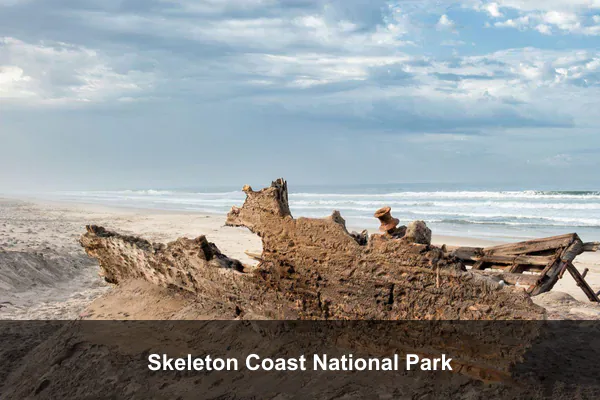
Skeleton Coast National Park on Namibia’s northwest Kunene coast is the country’s wildest shoreline, where fog, dunes, seal colonies, and rusting shipwrecks create unforgettable coastal drama. Visit for true remoteness and stark beauty, then track wildlife adapted to desert conditions, photograph iconic wrecks, and drive lonely beach and gravel routes in the southern zone. Go between May and September for cooler weather and easier overland travel. A permit is required, with most travelers entering the southern section by 4×4 while the far north is largely fly-in only. Fill fuel and stock food, water, and basic supplies before entry, since services inside the park are very limited.
| Best for | Remote scenery, shipwreck history, raw coastal drama |
|---|---|
| Location | Northwest coast of Namibia (Kunene Region) |
| Best time | May to September for cooler conditions |
| Access | Permit required; southern section by 4×4, north mostly fly-in |
Additional Info: Fill fuel and supplies before entry, because services inside the park are very limited.
Damaraland and Twyfelfontein
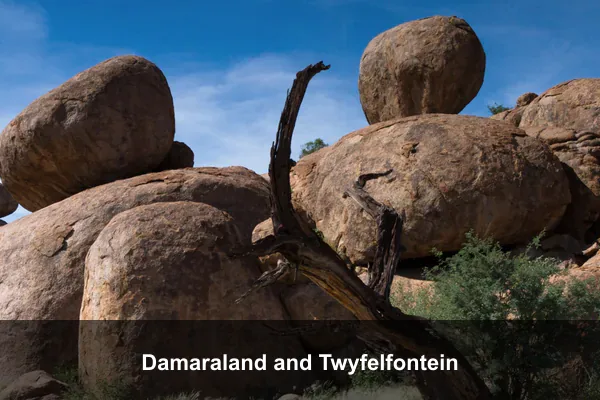
Damaraland and Twyfelfontein, in Namibia’s Kunene Region near Khorixas, are standout for ancient rock art, dramatic geology, and sightings of desert-adapted wildlife such as elephants and oryx. Visit UNESCO-listed Twyfelfontein to walk among thousands of engravings, then explore nearby valleys and dry riverbeds on tracking drives and short treks. The best months are May to September, when cooler weather makes hiking and wildlife tracking easier. Access is easiest by 4×4 self-drive or on a guided overland route, and at Twyfelfontein it is worth hiring a local guide to decode the engravings while keeping to protected paths.
| Best for | Rock art, geology, desert-adapted wildlife |
|---|---|
| Location | Kunene Region near Khorixas |
| Best time | May to September for trekking and tracking |
| Access | Best by 4×4 self-drive or guided overland route |
Additional Info: Use a local guide at Twyfelfontein to decode engravings and stay on protected paths.
Spitzkoppe
Spitzkoppe, in Namibia’s Erongo Region between Usakos and Swakopmund, is a must-stop for giant granite peaks, dramatic desert views, and some of the country’s most photogenic camps. It is best for rock climbing, stargazing, and wild camping: hike among boulders by day, then watch the Milky Way rise over the domes at night. Plan your visit from April to October for clearer night skies and cooler conditions. Access is straightforward by gravel road, but the final approach is a dirt track, so drive carefully and allow extra time. Arrive before sunset to claim a scenic campsite and set up safely in daylight.
| Best for | Rock climbing, stargazing, wild camping |
|---|---|
| Location | Erongo Region between Usakos and Swakopmund |
| Best time | April to October for clear night skies |
| Access | Reachable by gravel road; final approach is dirt track |
Additional Info: Arrive before sunset to secure a scenic campsite and set up safely in daylight.
Fish River Canyon
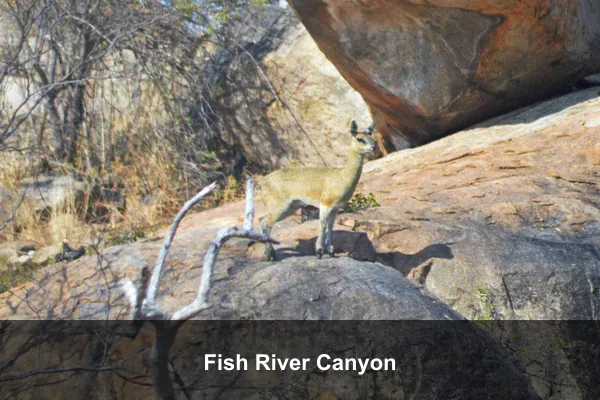
Fish River Canyon in Namibia’s Karas Region, accessed via Hobas and /Ai-/Ais, rewards visitors with dramatic viewpoints over Africa’s largest canyon, where layered rock walls and vast desert light make sunrise and sunset especially memorable. It is best for canyon panoramas, geology lovers, and adventurous multi-day hikers tackling the seasonal Fish River Canyon Trail. Plan your trip from May to September, when cooler temperatures make viewpoints comfortable and trekking safer. Reaching the area usually means a long self-drive through Keetmanshoop or the Luderitz corridor, so allow extra travel time and fuel stops. If you plan to hike, book permits early and confirm official trail opening dates before you travel.
| Best for | Canyon panoramas, multi-day hikes, geology |
|---|---|
| Location | Karas Region (Hobas and /Ai-/Ais) |
| Best time | May to September, especially for hikers |
| Access | Long self-drive via Keetmanshoop or Luderitz corridor |
Additional Info: If hiking, book permits early and confirm canyon trail opening dates before travel.
Luderitz and Kolmanskop Ghost Town
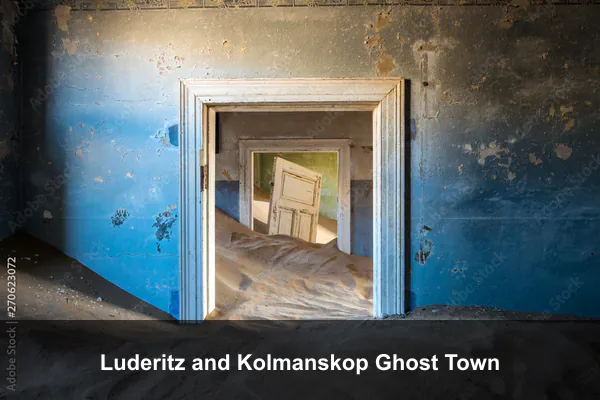
Luderitz and nearby Kolmanskop, on Namibia’s southern coast about 10 km from town, blend German colonial seaside heritage with one of Africa’s most photogenic ghost towns, where dunes pour through abandoned mansions. Visit for ghost-town photography and coastal history: shoot sand-filled rooms, explore old hospital and ballroom interiors, then return to Luderitz for waterfront architecture, seafood, and maritime stories. The best seasons are March to May and September to November for milder weather and clearer light. Reach the area by driving or flying to Luderitz, then take a short transfer to Kolmanskop, and book an early photo permit for softer morning light and fewer people in the ruins.
| Best for | Ghost-town photography and coastal history |
|---|---|
| Location | Southern coast, about 10 km from Luderitz |
| Best time | March to May and September to November |
| Access | Drive or fly to Luderitz; short transfer to Kolmanskop |
Additional Info: Book an early photo permit if you want softer light and fewer visitors in the ruins.
Zambezi Region: Bwabwata National Park and Kwando River
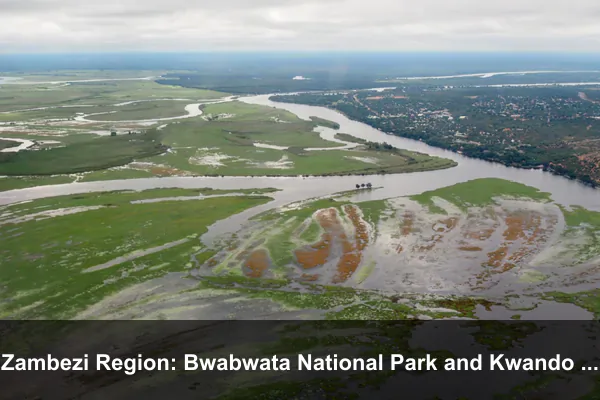
In Namibia’s far northeast, the Zambezi Region around Kongola and Divundu reveals a lush contrast to the country’s deserts, with Bwabwata National Park and the Kwando River offering classic boat safaris, wetland drives, and some of Namibia’s best birdwatching. Cruise quiet channels to spot hippos, crocodiles, elephants, and riverine antelope, then scan reedbeds and floodplains for kingfishers, fish eagles, and seasonal migrants. Visit June to October for stronger game viewing, or November to March for peak birdlife. Most travelers arrive via the B8 overland route, or take a regional flight followed by a road transfer to lodges. Carry both cash and cards, as payment networks can be unreliable in remote lodges.
| Best for | Boat safaris, birdwatching, and riverine wildlife |
|---|---|
| Location | Far northeast Namibia near Kongola and Divundu |
| Best time | June to October for game; November to March for birds |
| Access | B8 overland route or regional flight plus road transfer |
Additional Info: Carry both cash and cards, as payment networks can be unreliable in remote lodges.
Windhoek and Katutura Cultural Circuit

Windhoek and the Katutura Cultural Circuit are ideal for travelers easing into Namibia or decompressing after long overland routes, offering a compact window into city history, lively markets, and local food culture in central Namibia’s Windhoek metropolitan area. Start with colonial-era landmarks and independence stories in central Windhoek, then join a community-led township tour in Katutura to visit craft stalls, open-air markets, and neighborhood kitchens serving kapana and traditional dishes. Choosing local guides helps channel tourism income directly to residents and small food vendors. This stop works year-round, with especially pleasant weather from April to June and September to November, and it is easy to arrange as a half-day tour from central hotels or the airport area.
| Best for | City history, markets, and local food culture |
|---|---|
| Location | Central Namibia, Windhoek metropolitan area |
| Best time | Year-round; April to June and September to November are pleasant |
| Access | Easy half-day tours from central hotels or airport area |
Additional Info: Choose community-led township tours to support local guides and small food vendors.
Tips Before You Go
Namibia rewards planners: distances are long, fuel stations can be far apart, and many roads are gravel, so avoid night driving, keep a spare tire, and carry offline maps, cash, and extra water. For national parks and remote regions, reserve popular camps early and build buffer time for weather or punctures.
Before departure, confirm current park fees, entry rules, and timings on official pages like NWR, Access Namibia Parks, and protected-site updates for Twyfelfontein on UNESCO.
