
Botswana is one of Africa’s strongest destinations for low-density, high-impact travel, where you can move from watery delta channels to giant salt pans and deep Kalahari skies in one trip. This plan is built for real trip design, with each stop showing who it suits best, when to go, and how to reach it efficiently.
To keep the guide distinct, the lineup blends flagship safari regions with cultural and conservation sites many itineraries skip. Use it to combine fly-in safari legs with selective self-drive segments, depending on your budget, confidence with 4×4 routes, and available travel days.
Okavango Delta
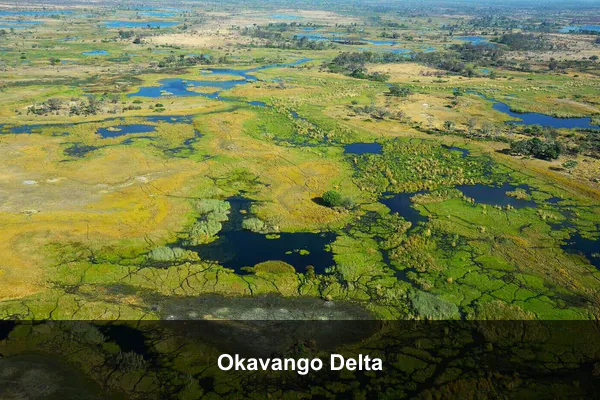
Okavango Delta is the classic choice for a first-time Botswana safari, where water channels, floodplains, and islands around Maun and private delta concessions hold exceptional wildlife density, from elephants and hippos to big cats. Explore by mokoro at reed level, add motorboat cruises for wider sightings, and combine both with guided game drives or walks for a complete water-based safari. Visit June to October for peak game viewing in the dry season, or January to March for superb birding and migratory species. Most trips begin with a flight into Maun, then continue by charter bush flight or 4×4 transfer to camp. Pack light in soft-sided bags, since most bush flights have strict luggage weight limits.
| Best for | First-time Botswana safari and mokoro trips |
|---|---|
| Location | Northwest Botswana, around Maun and delta concessions |
| Best time | June-October for game; January-March for birds |
| Access | Fly into Maun, then charter flight or 4×4 transfer |
Additional Info: Most bush flights have strict soft-bag weight limits, so pack light and flexible.
Moremi Game Reserve
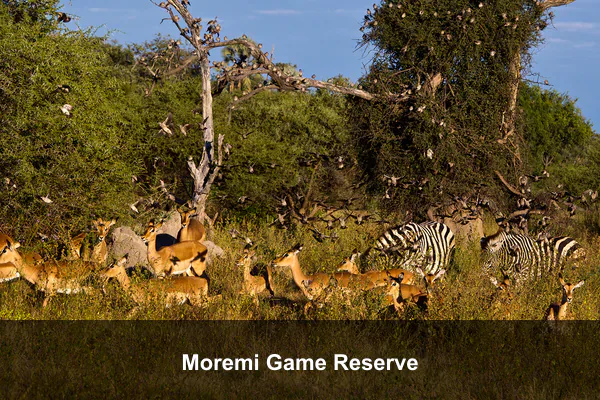
Moremi Game Reserve, in the central-eastern Okavango of the Ngamiland District, is one of Botswana’s most varied safari zones, blending floodplains, woodlands, and classic game-drive terrain in a single trip. It is best for mixed land-water safari experiences and photography: track big cats, elephants, and wild dogs on 4×4 drives, then explore channels by boat or mokoro for birdlife and wetland scenes. Wildlife is most concentrated from July to October. Access is by 4×4 via South Gate or by fly-in bush airstrips, and peak-season campsites and lodges often sell out months in advance, so early booking is essential.
| Best for | Mixed land-water safari and photography |
|---|---|
| Location | Central-eastern Okavango, Ngamiland District |
| Best time | July-October for concentrated wildlife |
| Access | 4×4 via South Gate or fly-in to bush airstrips |
Additional Info: Peak-season campsites and lodges in Moremi often sell out months in advance.
Chobe National Park (Riverfront)
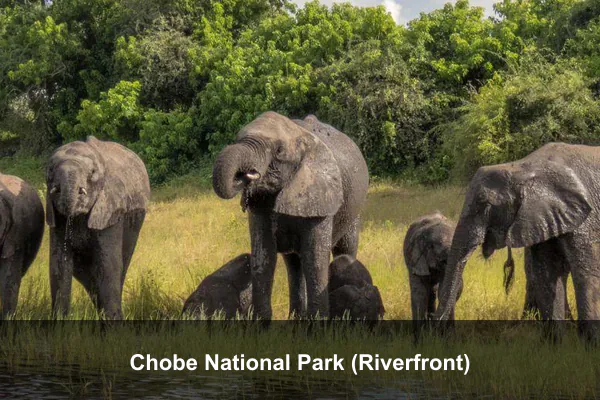
Chobe National Park’s Riverfront near Kasane in northeastern Botswana is the country’s premier corridor for seeing huge elephant herds and Cape buffalo, especially when you combine water and land safaris. Start with a game drive for close-up sightings along the floodplain, then switch to a sunset boat safari for dramatic river scenes, birds, and animals coming to drink. For the best wildlife concentration, visit in the May-October dry season. A smart plan is to book one morning and one afternoon river cruise to catch changing light and animal movement. Access is easy via Kasane Airport or by road from Victoria Falls/Kazungula.
| Best for | Elephant herds and sunset boat safaris |
|---|---|
| Location | Kasane, northeastern Botswana |
| Best time | May-October dry season |
| Access | Kasane Airport or road from Victoria Falls/Kazungula |
Additional Info: Book one morning and one afternoon river cruise for different light and animal movement.
Makgadikgadi Pans Game Reserve
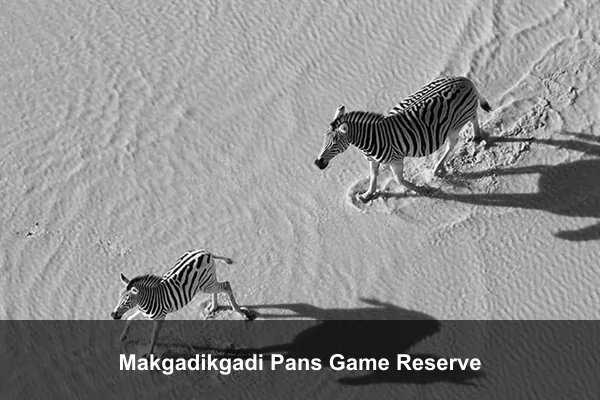
Makgadikgadi Pans Game Reserve, along the Boteti River and the western Makgadikgadi basin, is one of Botswana’s most striking destinations for vast salt-pan scenery, seasonal zebra migration, and a true sense of remoteness. Visit from November to March to see migration movement as herds track fresh grazing, or come in May to August for dry, shimmering pans and dramatic desert-scale horizons ideal for photography, game drives, and stargazing. Most travelers arrive by road transfer from Maun or Nata, and a 4×4 is strongly recommended for sandy, rough tracks. If you travel in winter, pack thermal layers, as nights on the pans can be very cold.
| Best for | Salt pans, zebra migration, and remote landscapes |
|---|---|
| Location | Boteti River and western Makgadikgadi basin |
| Best time | November-March for migration; May-August for dry pans |
| Access | Road transfer from Maun or Nata; 4×4 preferred |
Additional Info: Winter nights can be very cold on the pans, so carry thermal layers.
Nxai Pan National Park and Baines' Baobabs
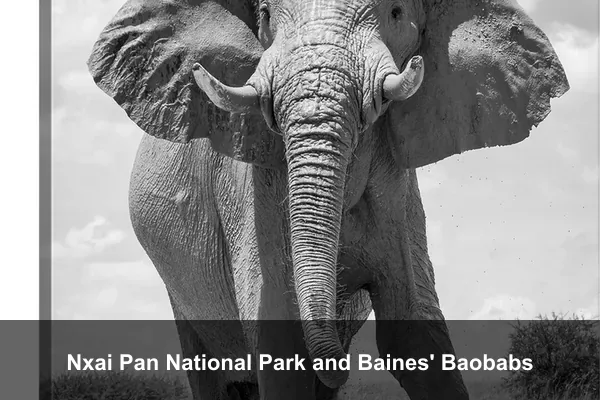
Nxai Pan National Park, north of the Makgadikgadi and reached off the A3 corridor, is one of Botswana’s best green-season escapes, especially from December to April after good rains when the pans turn grassy and attract zebra, giraffe, springbok, and predators. Plan game drives in the morning and late afternoon, then head to Baines’ Baobabs for classic Kalahari silhouettes and wide-sky photography at sunset. The park is ideal for travelers who want both strong wildlife viewing and one of the country’s most photogenic baobab landmarks in one trip. Access is typically by self-drive 4×4 from Maun or Kasane, and fuel and supplies are limited near the park, so stock up before the turnoff.
| Best for | Green-season game viewing and baobab photography |
|---|---|
| Location | North of Makgadikgadi, off the A3 corridor |
| Best time | December-April after good rains |
| Access | Self-drive 4×4 from Maun or Kasane |
Additional Info: Fuel and supplies are limited near the park, so stock up before the turnoff.
Central Kalahari Game Reserve
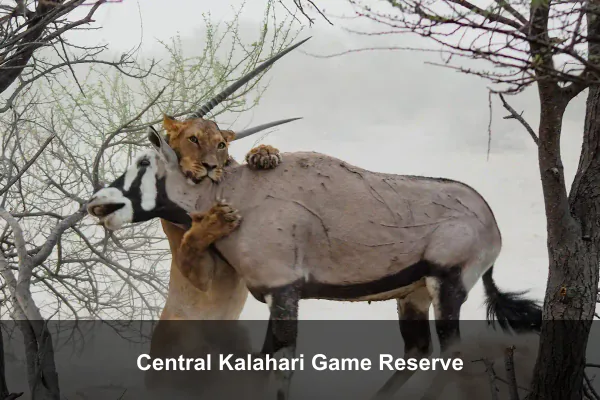
Central Kalahari Game Reserve in central Botswana, including Deception Valley, is one of Africa’s largest wilderness areas, where post-rain months (December-April) bring fresh grazing, dramatic predator activity, and endless open skies. Come for a truly remote desert safari: track lions and cheetahs across pale pans, watch antelope gather on new grass, and end the day with exceptional stargazing far from city light. Access is either by 4×4 through Matswere, Xade, or Tsau gates, or by fly-in safari camps for a faster, easier entry. If you self-drive, plan conservatively and carry extra fuel, plenty of water, and at least one spare tire.
| Best for | Remote desert safari and stargazing |
|---|---|
| Location | Central Botswana, including Deception Valley |
| Best time | December-April for best grazing and predator action |
| Access | 4×4 via Matswere/Xade/Tsau gates or fly-in camps |
Additional Info: Self-drivers should carry extra fuel, water, and at least one spare tire.
Kgalagadi Transfrontier Park (Mabuasehube)
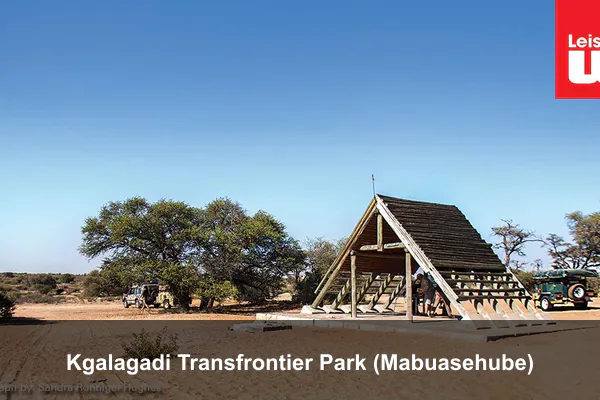
Kgalagadi Transfrontier Park’s Mabuasehube area is best for advanced self-drive desert adventure: a raw southwest Botswana wilderness of deep-sand tracks linking remote pan campsites in classic black-maned lion country. Visit for true isolation, then spend days navigating between pans, watching wildlife at waterholes, and camping under huge star fields with almost no crowds. The key practical detail is access and logistics: reach the Kgalagadi border region in a capable 4×4 convoy via Tsabong or the Two Rivers gates, as Botswana-side wilderness routes usually require at least two vehicles and advance booking. Conditions are generally best in March-May and September-October.
| Best for | Advanced self-drive desert adventure |
|---|---|
| Location | Southwest Botswana, Kgalagadi border region |
| Best time | March-May and September-October |
| Access | 4×4 convoy via Tsabong or Two Rivers gates |
Additional Info: Botswana-side wilderness routes usually require at least two vehicles and advance booking.
Tsodilo Hills
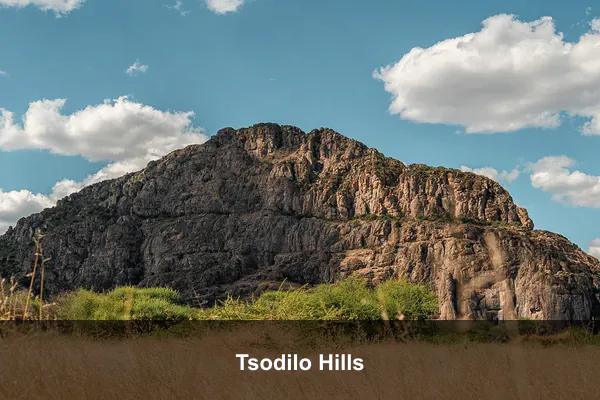
Tsodilo Hills, in northwest Botswana near Shakawe, is one of the country’s most powerful heritage destinations, with sacred quartzite outcrops, thousands of ancient rock paintings, and archaeological layers that reveal human presence across millennia. It is best for travelers interested in rock art, cultural history, and guided hikes through dramatic hill scenery. Join a local community guide to decode the stories behind key panels and follow proper trail etiquette at this spiritually important site. Plan your visit from April to October for cooler walking conditions, and reach the hills via a 4×4 dirt-road transfer from Shakawe or by charter flight if you want a faster approach.
| Best for | Rock art, heritage travel, and guided hikes |
|---|---|
| Location | Northwest Botswana near Shakawe |
| Best time | April-October for cooler walking conditions |
| Access | 4×4/dirt-road transfer from Shakawe or charter flight |
Additional Info: Use a local community guide to understand site meaning and proper trail etiquette.
Northern Tuli Game Reserve
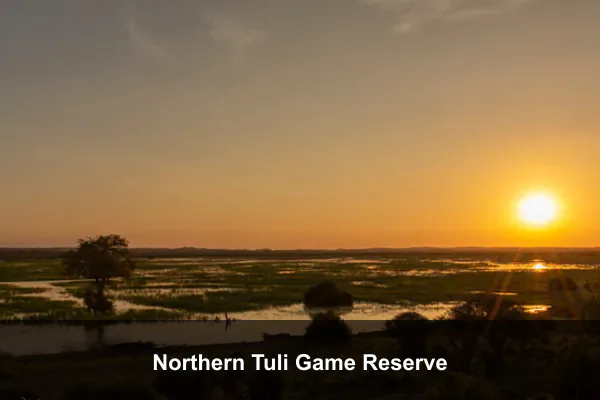
Northern Tuli Game Reserve delivers an active safari style in northeastern Botswana, along the Limpopo-Shashe systems, making it especially rewarding for walkers, adventure-focused travelers, and repeat Botswana visitors. Instead of only game drives, you can spend days on guided walking trails, horseback safaris, and some of the country’s best guided cycling routes, all set against riverine woodland, wide riverbeds, and dramatic cliff formations. Wildlife encounters feel close and immersive, with expert guides shaping flexible, varied outings from sunrise tracking to scenic sundowner stops. Visit from May to September for cooler weather and more comfortable days outdoors. Access is practical by road transfer from Francistown, while private charter flights offer a faster, more exclusive arrival.
| Best for | Active safari, walking, and repeat Botswana visitors |
|---|---|
| Location | Northeastern Botswana along Limpopo-Shashe systems |
| Best time | May-September for cooler weather |
| Access | Road transfer from Francistown or private charter |
Additional Info: This is one of Botswana's best areas for guided horseback and cycling safaris.
Khama Rhino Sanctuary
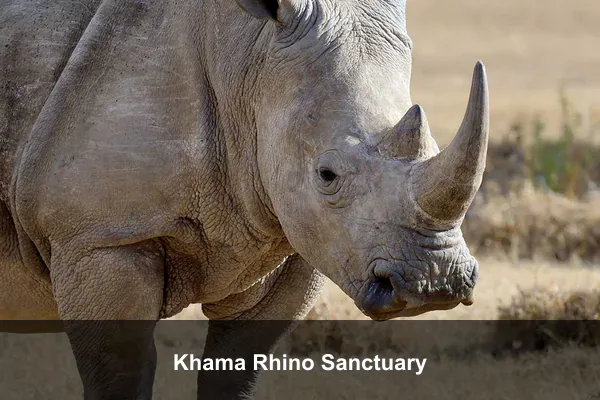
Khama Rhino Sanctuary, near Serowe in Botswana’s Central District, is one of the best places in the country for rhino tracking on a convenient road-stop safari while directly supporting community-led conservation. Join an early morning game drive for your best chance to see active white and black rhinos, then look for zebra, giraffe, and antelope around the pans and grasslands. Your park fees help fund rhino protection and local livelihoods, making this a meaningful stop between larger safari destinations. The reserve is accessible year-round by easy 2WD drive from either Gaborone or Francistown, with April to September offering the coolest, most comfortable conditions.
| Best for | Rhino tracking and convenient road-stop safari |
|---|---|
| Location | Near Serowe, Central District |
| Best time | Year-round; April-September is coolest |
| Access | Easy 2WD drive from Gaborone or Francistown |
Additional Info: Early morning game drives usually offer the best chance of active rhino sightings.
Tips Before You Go
Lock in core safari nights early for July to October, keep luggage soft-sided for bush flights, and plan longer drive buffers than map apps suggest. In remote parks, carry extra water, a tire repair kit, offline navigation, and avoid night driving between reserves.
Before booking, check current park fees, road updates, and entry requirements on Botswana Tourism Organisation, and verify protected-site details for Okavango Delta and Tsodilo.
