

Oman rewards travelers who plan by landscape and season, not just by city. This guide uses a distinct experience-first angle, pairing forts, wadis, deserts, marine reserves, and monsoon-cooled Dhofar so you can see the country’s range without repeating the same type of stop.
Use it as a practical framework for a 7- to 12-day trip: start in Muscat, loop through the interior mountains and forts, continue to the east coast and desert, then fly south for Salalah if your dates match Khareef. Each section highlights when to go, how to reach it, and what kind of traveler gets the most value.
Sultan Qaboos Grand Mosque, Muscat

Begin your Oman journey at Sultan Qaboos Grand Mosque in Muscat’s Bawshar district, a must for architecture lovers and first-time visitors, where vast prayer halls, carved sandstone, and one of the world’s great chandeliers showcase the country’s design heritage. Plan your visit between December and March and aim for early morning, when light is soft and non-Muslim entry is usually permitted. Spend time admiring the main courtyard and interiors, then walk the landscaped grounds for photos before midday heat. Dress modestly with covered shoulders and legs, and women should bring a head covering. The mosque is easy to reach, about 20-25 minutes by taxi from Muscat International Airport.
| Best for | Architecture lovers and first-time Muscat visitors |
|---|---|
| Location | Bawshar district, Muscat |
| Best time | December-March, morning visits |
| Access | 20-25 min by taxi from Muscat International Airport |
Additional Info: Non-Muslim visits are typically morning hours, so arrive early with modest clothing and a head covering.
Muttrah Corniche, Souq, and Fort Viewpoints
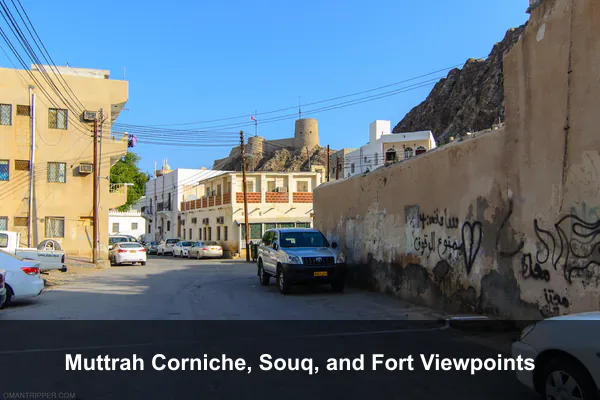
Muttrah Corniche on Muscat’s waterfront is one of Oman’s best spots for old-port charm, combining a lively souq, sea views, and classic fort backdrops. Come in the late afternoon or evening from October to April, when the heat softens and the promenade fills with locals catching the sea breeze and sunset light. Wander the souq for textiles, silver, and frankincense, but compare frankincense grades in several shops before buying, as scent quality varies clearly. For photos, climb nearby fort viewpoints at golden hour, then stroll the corniche after dark. It is an easy 15-20 minute drive from central Muscat.
| Best for | Souvenir shopping, waterfront walks, sunset photos |
|---|---|
| Location | Muttrah waterfront, Muscat |
| Best time | October-April, late afternoon to evening |
| Access | 15-20 min drive from central Muscat |
Additional Info: Compare frankincense grades in several shops before buying, because scent quality differs noticeably.
Nizwa Fort and Friday Souq
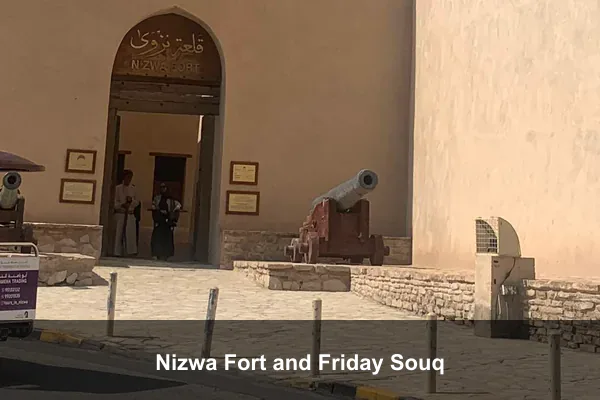
Nizwa Fort in Nizwa, Ad Dakhiliyah, pairs Oman’s most impressive inland stronghold with the photogenic Friday Souq, making it ideal for fort history, crafts, and market culture. Start at the massive circular tower for panoramic views and exhibits on Omani defense, then walk to the souq for silver jewelry, khanjars, pottery, dates, and lively local trading. Visit between October and April for the best weather, and choose Friday morning for the famous livestock ring—arrive before 7:30 AM to catch the most active bidding and movement. Nizwa is easy to reach as a day trip, about 1.5 to 2 hours by car from Muscat.
| Best for | Fort history, crafts, and market culture |
|---|---|
| Location | Nizwa, Ad Dakhiliyah |
| Best time | October-April; Friday morning for livestock market |
| Access | 1.5-2 hours by car from Muscat |
Additional Info: For the Friday livestock ring, arrive before 7:30 AM to catch the most active trading.
Bahla Fort and Oasis Wall (UNESCO)
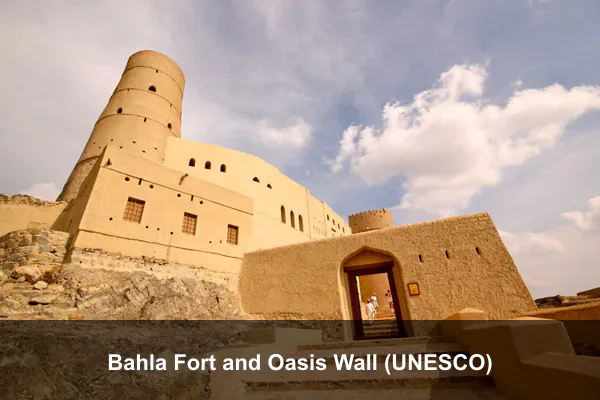
For a compact half-day trip, Bahla Fort and its historic oasis wall in Bahla, Ad Dakhiliyah, offer one of Oman’s best UNESCO heritage experiences, especially if you love mud-brick architecture and layered desert history. Plan to visit between October and April for cooler temperatures, and reach the site easily in about 25 minutes by car from Nizwa. Walk the restored fort rooms and towers, then trace sections of the defensive wall that once protected the palm-fed settlement. After the fort, stop at a local Bahla pottery workshop to see the town’s living craft tradition in action and connect the monument’s past with the community that still shapes clay today.
| Best for | UNESCO heritage and mud-brick architecture |
|---|---|
| Location | Bahla, Ad Dakhiliyah |
| Best time | October-April |
| Access | About 25 min by car from Nizwa |
Additional Info: Add a Bahla pottery stop after the fort to connect the site with the town’s living craft tradition.
Jebel Akhdar (Saiq Plateau Villages)
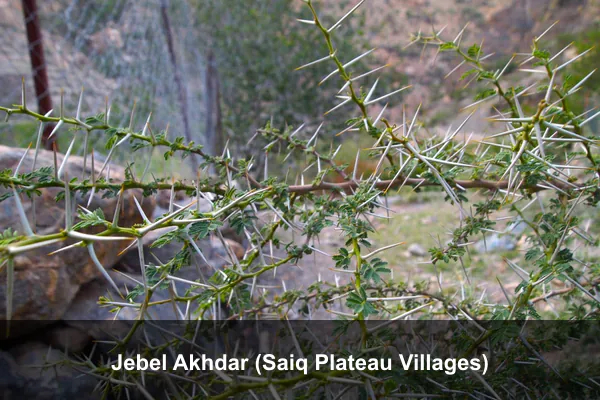
Jebel Akhdar, on the Saiq Plateau in the Al Hajar Mountains of Ad Dakhiliyah, is Oman’s cool-weather escape, best for hikes through stone villages and terrace-farm scenery on dramatic slopes. Walk between traditional hamlets, see rose gardens in bloom in March-April, and return in September-November for excellent trekking weather and clear mountain views. The trip takes about 2.5 hours from Muscat, but the steep final ascent is only allowed by 4WD. Refuel in Birkat Al Mouz before climbing, since fuel stations and other services are limited on the higher plateau.
| Best for | Cool-weather hikes and terrace-farm scenery |
|---|---|
| Location | Al Hajar Mountains, Ad Dakhiliyah |
| Best time | March-April for roses; September-November for trekking |
| Access | 2.5 hours from Muscat; 4WD required for final ascent |
Additional Info: Refuel in Birkat Al Mouz before climbing, since services become limited on the higher plateau.
Wadi Shab
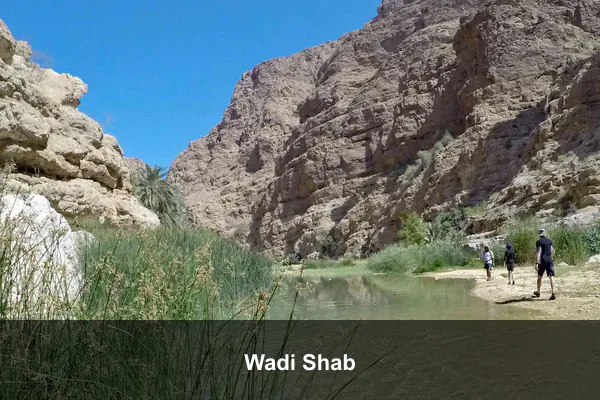
Wadi Shab, near Tiwi in South Al Sharqiyah, is one of Oman’s best adventure days for a swim-hike experience and striking canyon photography. From Muscat, plan about two hours by road, then a short boat crossing to start the trail. The route alternates between dry hiking through palm-framed cliffs and swimming through emerald pools, with cave access at the end via a narrow water passage to a hidden waterfall. Go between September and May for the most comfortable weather and better overall conditions. Wear grippy water shoes for slippery rocks, and bring a dry bag so your phone, camera, and valuables stay protected during the cave swim.
| Best for | Swim-hike adventure and canyon photography |
|---|---|
| Location | Near Tiwi, South Al Sharqiyah |
| Best time | September-May |
| Access | Around 2 hours from Muscat plus short boat crossing |
Additional Info: Wear grippy water shoes and carry a dry bag for the narrow cave swim to the hidden waterfall.
A'Sharqiyah Sands (Wahiba Sands)
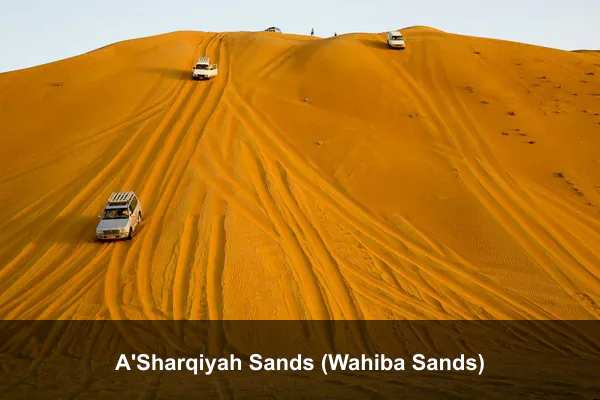
A’Sharqiyah Sands (Wahiba Sands), near the Bidiyah area in North Al Sharqiyah, is Oman’s classic desert overnight for rolling orange dunes, Bedouin hospitality, and remarkably clear dark-sky stargazing. Spend the afternoon on a dune drive, then settle into a desert camp for traditional food, storytelling, and star-filled silence after sunset. For the best experience, choose a camp that offers sunrise dune walks, when temperatures are coolest and the soft morning light is strongest for photos. This region is best visited from September to April, and it is about 2.5 to 3 hours from Muscat; roads are paved to the edge, but a 4WD is strongly recommended beyond that for safe desert access.
| Best for | Desert camping, dune drives, stargazing |
|---|---|
| Location | Bidiyah area, North Al Sharqiyah |
| Best time | September-April |
| Access | 2.5-3 hours from Muscat; 4WD recommended beyond paved roads |
Additional Info: Choose a camp with sunrise dune walks when temperatures are lowest and photo light is strongest.
Ras Al Jinz Turtle Reserve
Ras Al Jinz Turtle Reserve, on the Ras Al Hadd peninsula along South Al Sharqiyah’s coast, is Oman’s standout conservation-led wildlife experience for guided turtle nesting observation. Join a ranger-led dawn or night walk to watch endangered green turtles come ashore, lay eggs, and return to sea while learning how the reserve protects fragile nesting habitats. May to September is the peak season for nesting activity, but tours operate year-round, so visits are possible in any month. For smooth planning, pre-book your dawn or night slot and allow about 3.5 hours by road from Muscat; during sightings, keep phone lights and camera flash off to avoid disturbing nesting turtles.
| Best for | Guided turtle nesting observation |
|---|---|
| Location | Ras Al Hadd peninsula, South Al Sharqiyah coast |
| Best time | May-September for peak nesting; tours run year-round |
| Access | About 3.5 hours by road from Muscat; pre-book dawn or night slot |
Additional Info: Keep phone lights and camera flash off during sightings to avoid disturbing nesting turtles.
Daymaniyat Islands Nature Reserve
Daymaniyat Islands Nature Reserve is the top marine day trip near Muscat, ideal for snorkeling, diving, and spotting turtles, reef fish, and vibrant coral gardens. Located offshore between Seeb and Barka, the protected islands are reached on licensed boat tours departing from Al Mouj or Seeb marinas, making access straightforward for a half-day or full-day outing. Plan your visit between November and April, when sea conditions are generally calmer and visibility is better. Because this is permit-based nature tourism, note that island landing is restricted from May to October, so confirm current permit rules and inclusions with your operator before you pay.
| Best for | Snorkeling, diving, and marine life |
|---|---|
| Location | Offshore between Seeb and Barka |
| Best time | November-April for easier sea conditions |
| Access | Licensed boat tours from Al Mouj or Seeb marinas |
Additional Info: Island landing is restricted from May to October, so confirm permit details with your operator before paying.
Salalah Khareef Circuit (Wadi Darbat, Al Mughsail, Al Baleed)
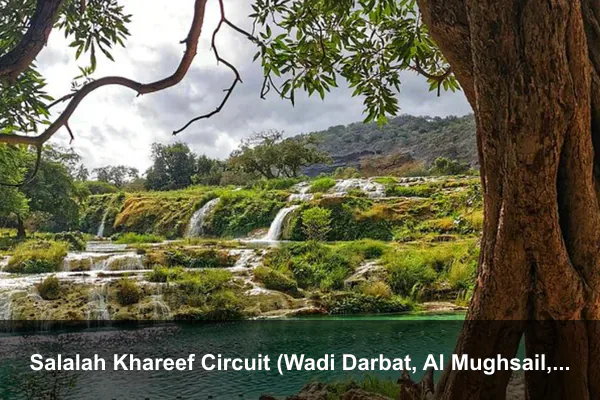
End your Oman itinerary in Dhofar on the Salalah Khareef Circuit, where June to September monsoon mists turn the region green and feed waterfalls at Wadi Darbat, while Al Mughsail’s cliffs and blowholes add dramatic coastal stops and Al Baleed links the journey to Oman’s frankincense heritage. This loop is best for summer greenery, waterfalls, and culture, and it feels completely different from northern Oman’s desert-mountain landscapes. Fly domestically to Salalah, then explore by self-drive road loop or guided day tours along the nearby Dhofar coast. For archaeology and quieter beaches, return between October and February. If traveling in peak Khareef, book July-August weekends early, as demand pushes rates up and rooms sell out fast.
| Best for | Summer greenery, waterfalls, and frankincense heritage |
|---|---|
| Location | Salalah and nearby Dhofar coast |
| Best time | June-September for Khareef; October-February for archaeology and beaches |
| Access | Domestic flight to Salalah, then self-drive or guided day tours |
Additional Info: Book July-August weekends early, because Khareef demand drives up rates and lowers availability.
Tips Before You Go
Apply for your visa early, reserve 4WD segments in advance, and schedule long drives in daylight. Keep modest clothing for mosques and smaller towns, carry some cash for souqs, and avoid entering wadis after heavy rain alerts.
Before booking, verify updates on official pages: Oman eVisa, Experience Oman, Daymaniyat permit rules, Ras Al Jinz turtle timings, seasonality guide, and UNESCO pages for Bahla Fort and Land of Frankincense.
